
Gabriele Münter: A Pioneering Expressionist and Her Enduring Passions for Art, Photography, and Kandinsky
Gabriele Münter (1877–1962) stands as a pivotal figure in German Expressionism, her work often overshadowed by her more famous partner, Wassily Kandinsky. Yet, a recent survey at the Guggenheim Museum in New York, titled "Contours of a World," brings her innovative contributions to the forefront. This exhibition, running through March 2026, celebrates Münter's multifaceted love affair with photography, painting, and Kandinsky himself—a relationship that fueled her artistic evolution while challenging the male-dominated narrative of early modernism. Münter's intimate, generous approach to art contrasts sharply with the explosive tendencies of her contemporaries, offering viewers a personal invitation into her world through vibrant colors, domestic scenes, and experimental compositions.
Born in Berlin on February 19, 1877, into a prosperous family, Münter displayed artistic talent early on. Orphaned by age 21, she inherited a fortune that afforded her independence—a rarity for women of her era. She pursued formal training at the Ladies' Academy in Düsseldorf and later at the Phalanx School in Munich, where she met Kandinsky in 1902. As her teacher, Kandinsky recognized her potential, and their student-mentor dynamic soon blossomed into a romantic partnership that lasted over a decade. Together, they escaped societal constraints, traveling and creating art in a union that defied conventions. Münter later reflected on this period as one of liberation, where she found her voice amid Bavaria's picturesque landscapes.
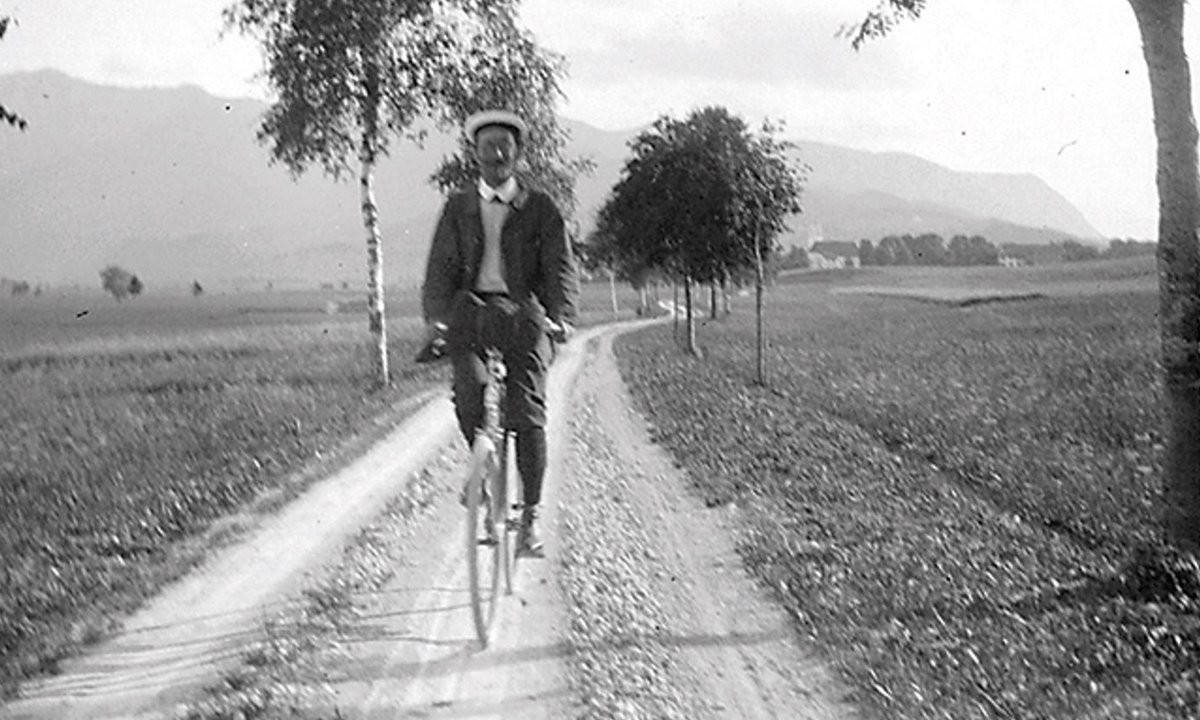
Münter's journey into art began not with brushes, but with a camera. In 1898–1900, she embarked on a transformative trip to the United States with her sister Emmy, armed with a No. 2 Bulls-Eye Kodak. This portable device allowed her to capture candid snapshots of American life—rural scenes, urban bustle, and family portraits—that honed her eye for composition and cropping. Photography became a prelude to her painting, teaching her to frame the world in innovative ways. As curator Lauren O'Neill-Butler notes in the Guggenheim catalog, Münter's photos "prefigure the bold cropping and flattened perspectives" in her later canvases. Examples include her images of Texas landscapes and Missouri portraits, where shadows and edges play with visibility, echoing the abstract elements she would develop.
Upon returning to Europe, Münter's photographic experiments influenced her shift to painting. In Murnau am Staffelsee, Bavaria, where she and Kandinsky summered from 1908, she captured the town's vibrant market square in From the Griesbräu Window (1908). This work, the exhibition's opener, depicts pink rooftops merging with distant mountains, symbolizing a creative hospitality that invites viewers in. The pink hues, added by locals to attract tourists, mirror Münter's own embellishments, blending reality with artistic license. Her photography's impact is evident in Still Life on the Tram (After Shopping) (ca. 1909–12), a tightly cropped view of parcels on a woman's lap, emphasizing everyday intimacy over grand narratives.
The couple's time in Murnau marked a creative peak. In 1909, they purchased a house there, dubbing it the "Russians' House" due to Kandinsky's heritage. This period saw the birth of their expressive style, characterized by bold colors and simplified forms. Münter's Dragon Fight (1913), inspired by the Saint George legend, features a green landscape clashing with red blood from a multi-headed dragon—interpreted as an allegory for the Der Blaue Reiter group challenging artistic traditions. Co-founded by Münter and Kandinsky in 1911, Der Blaue Reiter was a Munich-based collective that included Franz Marc and August Macke, advocating for spiritual abstraction and emotional expression.
Münter's paintings from this era reveal a personal touch absent in Kandinsky's more theoretical works. Living Room in Murnau (Interior) (ca. 1910) depicts slippers at the canvas's edge, family mementos, and Kandinsky reclining in bed—a candid glimpse into their shared life. This generosity contrasts with Kandinsky's claims of spiritual grandeur, as Münter grounded her art in the domestic and relational. Her self-inclusion, influenced by photography, appears in shadows on film or implied viewer perspectives, making her works interactive portals.
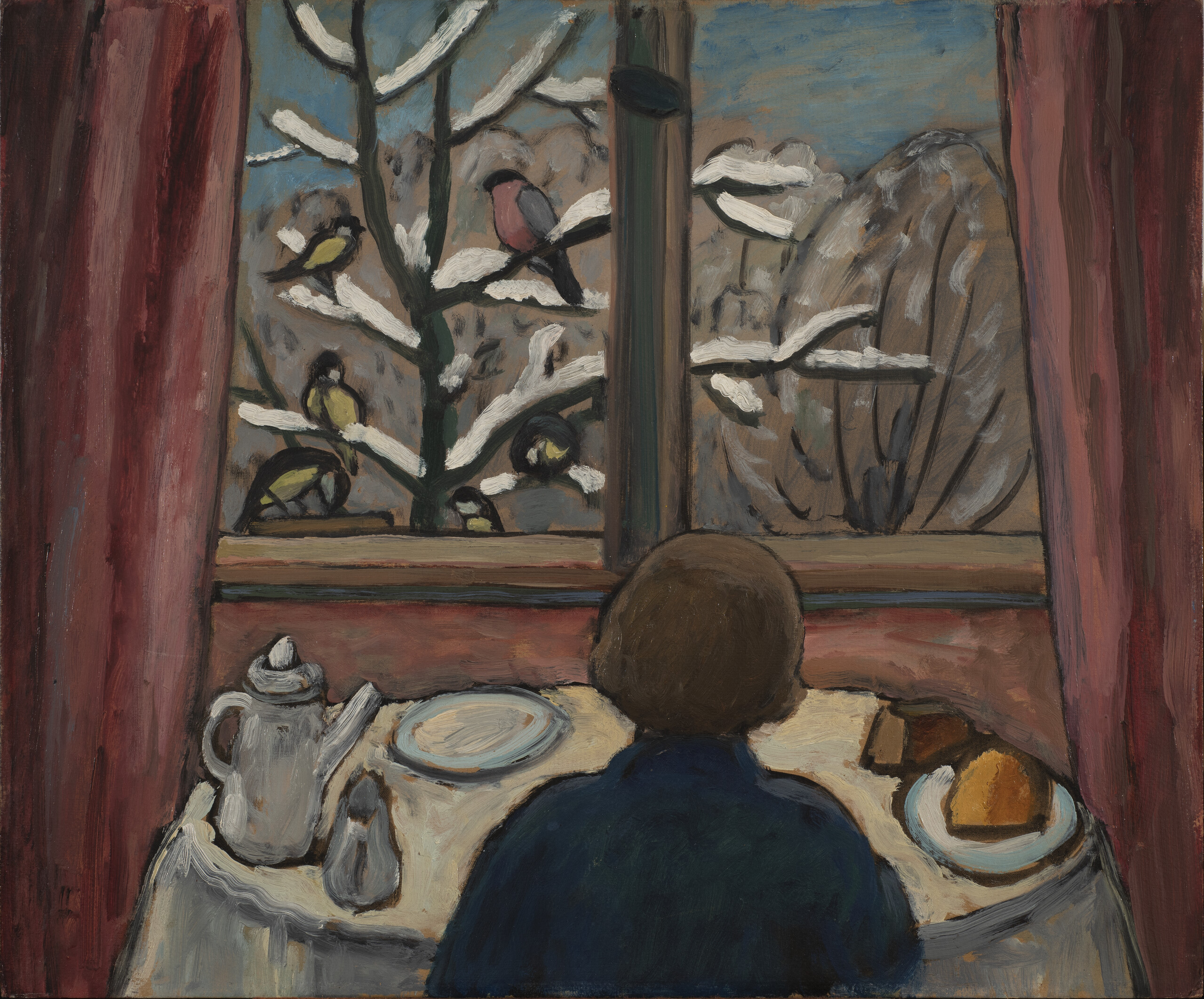
World War I disrupted their idyll. As a Russian national, Kandinsky fled Germany in 1914, leaving Münter to safeguard his artworks in their Murnau home. They reunited briefly in Stockholm in 1915–16, but by 1920, Münter learned of his marriage to Nina Andreevskaya in Moscow. Heartbroken yet resilient, she continued creating, relocating to Cologne and Berlin before returning to Murnau in 1931 amid rising Nazism. Her later works, like Breakfast of the Birds (1934), arrange tea, cake, and birds outside a window, offering sustenance to the viewer while a seated figure (possibly a self-portrait) gazes outward. This piece, with its nurturing gesture, exemplifies her intimate Expressionism.
The Letter (1930) extends a plate of grapes at the canvas's edge, a welcoming act that subverts aggressive modernism like Picasso's Les Demoiselles d’Avignon (1907). Münter's art, free of hostility, engages deeply with form and color, proving women could innovate without confrontation. In Snowy Landscape with a Red-Roofed House (1935), a central path and shoveling figures invite entry into a wintry scene, evoking warmth amid cold.
The Guggenheim exhibition, curated by Megan Fontanella, occupies secluded rooms off the main ramp—fitting for Münter's private style, unlike Kandinsky's vibrant spirals. It features over 80 works, including paintings, prints, and photographs, highlighting her role in modernism. Fontanella emphasizes Münter's photography as foundational, predating her painting breakthroughs. The show also addresses her legacy: After Kandinsky's 1944 death, she donated his early works to the Lenbachhaus in Munich, ensuring his recognition while securing her own.
Münter's life extended beyond Kandinsky. She outlived him by 18 years, passing in Murnau on May 19, 1962, at 85. Her foundation preserved her archive, influencing feminist art histories. Today, exhibitions like this reclaim her from the "muse" label, positioning her as a co-creator of Expressionism. Her photography, once undervalued, now reveals her as a multimedia pioneer, blending lens and brush in ways that anticipated postmodernism.
Münter's passions—photography for capturing the ephemeral, painting for emotional depth, and Kandinsky for collaborative spark—intertwine in a legacy of quiet revolution. As the Guggenheim show demonstrates, her art offers hospitality in a turbulent world, inviting us to linger and connect.
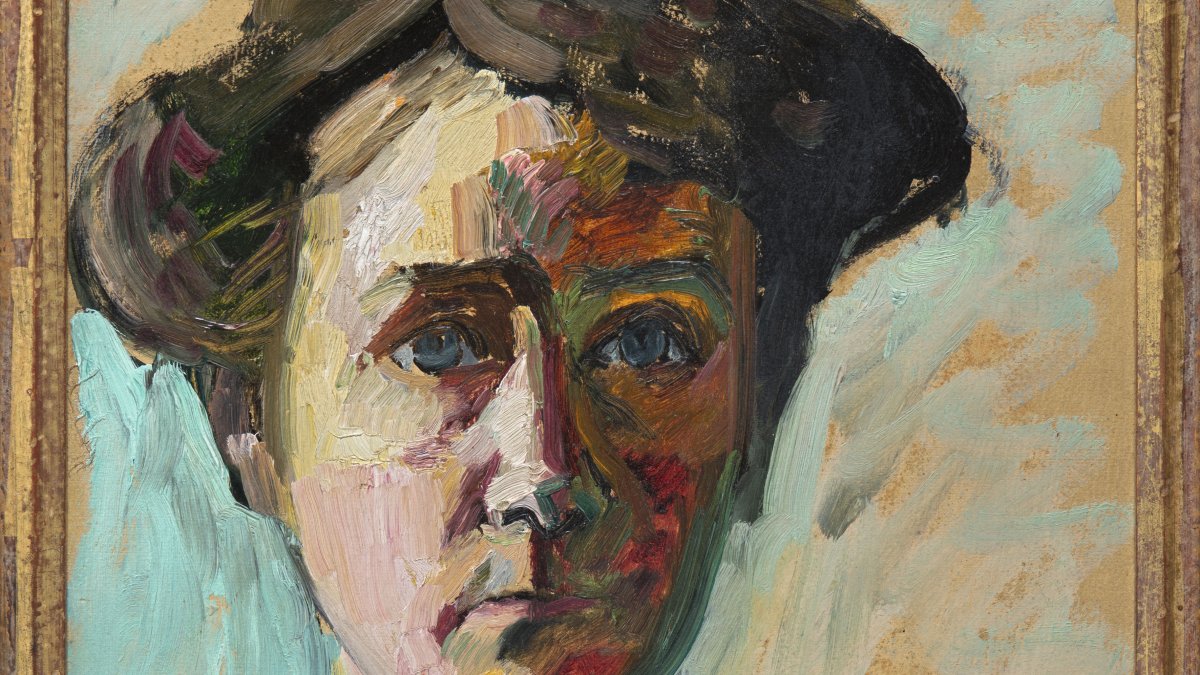
Her influence persists in contemporary artists who blend media, like those in the New Leipzig School. Münter's Murnau house, now a museum, preserves her studio, offering glimpses into her creative process. Scholars praise her for subverting gender norms, creating art that is both personal and universal.
In reflecting on Münter's journey, one sees a woman who navigated love, loss, and legacy with grace. Her affair with Kandinsky was more than romance—it was a catalyst for mutual growth. Photography sparked her visual language, while painting became her voice. The Guggenheim retrospective ensures her story is told on her terms, a testament to enduring artistic passion.
Münter's later years in Murnau were marked by reflection. Despite Nazi scrutiny—her work was deemed "degenerate"—she persisted, hiding Kandinsky's abstracts to protect them. Postwar, she emerged as a guardian of Expressionism, donating collections that shaped museums like the Lenbachhaus. Her photography, numbering thousands, remains a treasure trove for researchers, revealing her keen eye for light and shadow.
Ultimately, Münter's love affairs—with lens, canvas, and companion—define a life of creative abundance. As Fontanella states, her work "offers particularly intimate views," a hospitality that endures in every brushstroke.

This exhibition not only revives interest in Münter but also prompts reevaluation of women's roles in modernism. From her American snapshots to Bavarian landscapes, her art bridges continents and eras, proving passion's power to transcend.
FAQ
Who was Gabriele Münter?
Gabriele Münter (1877–1962) was a German Expressionist painter, photographer, and co-founder of Der Blaue Reiter, known for her intimate, colorful works.
What was her relationship with Wassily Kandinsky?
Münter was Kandinsky's student, partner, and collaborator for over a decade, sharing creative breakthroughs in Murnau before their 1917 separation.
How did photography influence Münter's painting?
Her 1898–1900 U.S. trip with a Kodak camera taught her cropping and composition, which she applied to paintings like Still Life on the Tram.
What is the Guggenheim exhibition about?
"Contours of a World" surveys over 80 of Münter's works, emphasizing her photography, paintings, and independent legacy beyond Kandinsky.
Key artworks by Münter mentioned?
Notable pieces include From the Griesbräu Window (1908), Dragon Fight (1913), Breakfast of the Birds (1934), and Snowy Landscape with a Red-Roofed House (1935).


