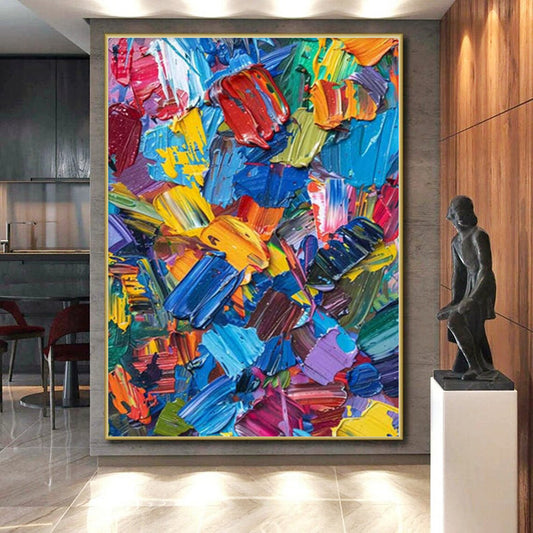
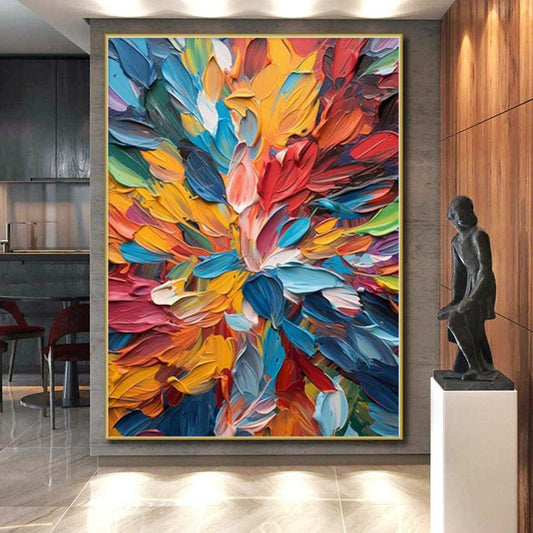
How to Choose Painting Knife Painting That Keeps the Slab, Not the Frosting
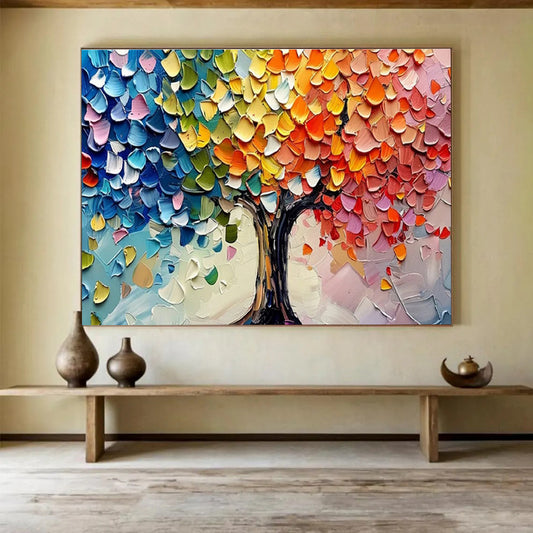
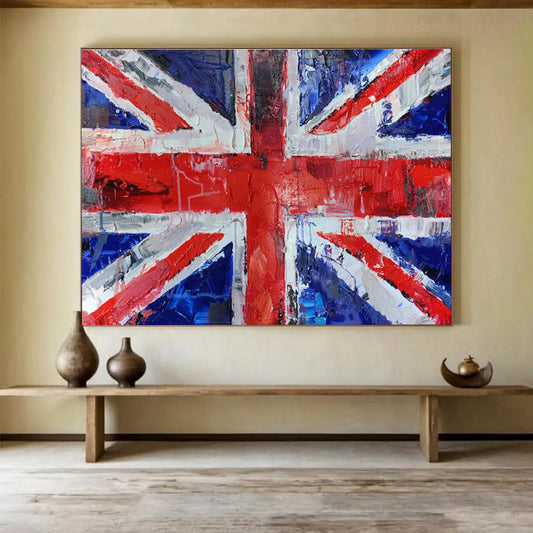
A painting knife is a tool, not a style. It lays a slab, scrapes a trough, and leaves an edge a brush cannot make. Painting knife painting fails when that edge is only frosting: rainbow peaks, a tree built of candy ridges, a flag of thick paint. The tool should still be visible after the subject is named. If the knife is only a way to look expensive, the wall will date.
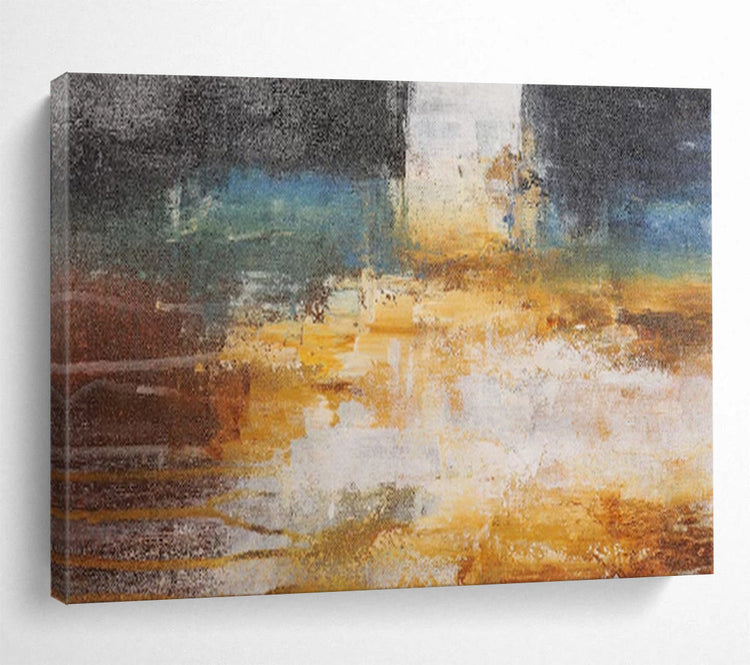
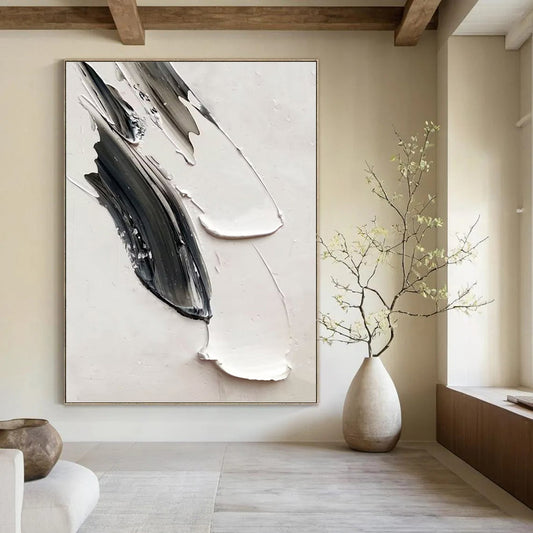
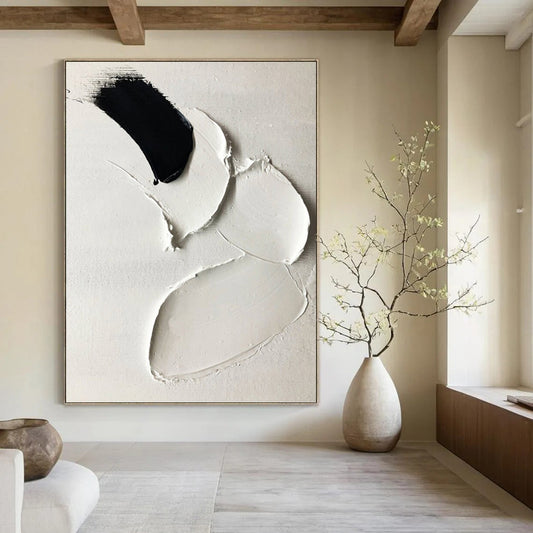
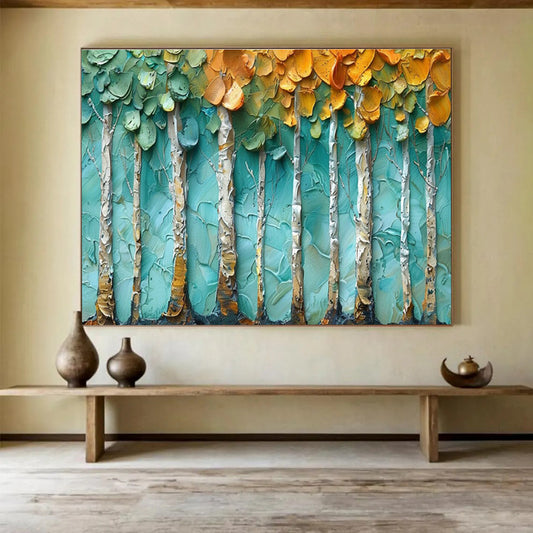
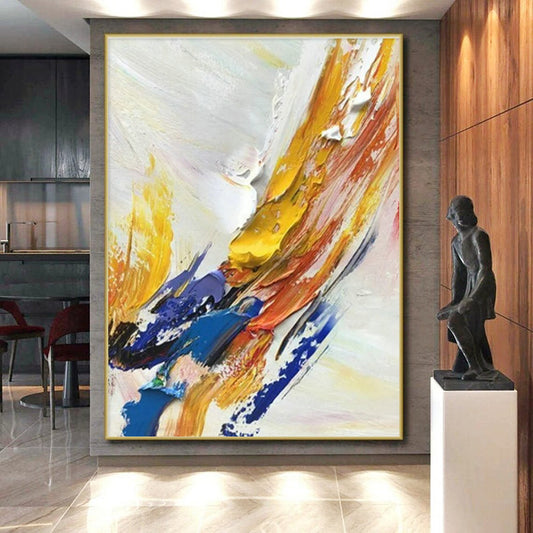
Painting Knife Painting in this collection means hand-built canvas: monochrome swirls, black-and-white slabs, a blossom or a birch reduced to ridges. The listing is a language of the blade. The piece you receive is painted to order in that language, not a print of someone else’s knife.
The knife is a trowel, not a signature
Wikipedia’s article on the palette knife separates two tools. One mixes on the palette. The other is cranked like a trowel and lays paint on the canvas. The second is the one that matters here. Paint sits on the flat of the blade, not in bristles. The mark is a slab, a scrape, or a cut edge. A brush can fake thickness. It cannot fake that flat.
The National Gallery of Art’s technical glossary is blunt about the object: a long, thin, flexible spatula, used to mix, to move paint, and occasionally to apply it. “Occasionally” is the historical point. Older pictures used the knife for a highlight, a jewel, a ridge of lead white. Modern work often makes the knife the whole event. That is legitimate if the slab has a job. It is not legitimate if every inch is crusted so the thumbnail looks tactile.
Frank Auerbach is the severe version of the same tool. Tate’s note on how his paintings are made records brushes, knives, putty scrapers, and paint straight from the tube—and the habit of scraping back. The thick surface is not a souvenir of effort. It is what survived the scrape. You are not buying an Auerbach head. You are borrowing the test. Does the ridge remain because it had to, or because the listing needed the word “sculptural”?
A working split:
- Slab and scrape: black, white, earth. The knife is the picture.
- One motif in ridges: a birch, a blossom, a wave, reduced. Fine if the form still reads from the far chair.
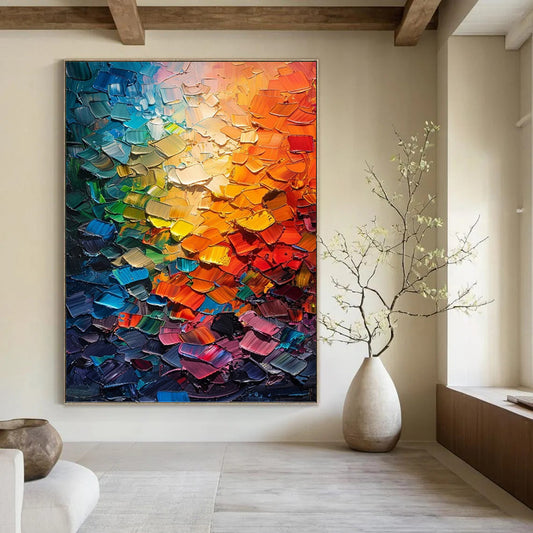
- Rainbow knife: every hue at full volume. Right for a short wall you mean to be loud. Wrong across a sofa you sit with nightly.
- Patriotic or whimsical crust: a costume. Leave it unless that costume is the brief.
How a slab sits in a room
Stand at the distance you will actually look. Knife paint is a lighting problem. Side light makes the edge. A downlight on pale peaks turns height into glare. West windows rake gold and white until afternoon and then flatten them. Mid values—gray, umber, a dirtier white—are kinder than optical white with cream frosting.
Projection is the living problem. A few millimeters of slab is enough for most houses. A centimeter of brittle rainbow above a sofa is dust and a bump. Halls and entries should stay lower: bags travel closer than a seated guest. Bedrooms need quieter sheen; a reading lamp on a sweet peak is a second sun. Dining walls can take a monochrome slab better than a colorful tree, because glass and plates already supply the bright objects.
Color should share a temperature with wood, not with one cushion. Oak sits with clay, sand, and warm gray. Cool stone sits with ash and a blue-black scrape. A rainbow knife field wants a room that can take chroma. A small office and a pale bedroom usually cannot. Gold on a crest, repeated, becomes trim. Ask for metal as a note, or leave it off.
Scale follows the empty rectangle, and the mark has to survive it. A small swirl in the middle of a long sofa looks like a sample of texture. A wide field of tiny candy ridges looks like a tile. Give the canvas most of the span, and keep the slabs large enough to read from the far chair. One knife canvas is a proposition. Two only work if they share weight and ground.
Handmade is the reason to order the tool. A printed “knife” is one photograph of ridges. A painted slab breaks: a trough goes darker, an edge is cut, a scrape shows the ground. Look for angled close shots, oil or acrylic on canvas, painted to order. Ask whether high peaks ship rolled or stretched. A tube can crush a crest that looked fine on a phone. Approve photos of the finished surface before it ships.
A short buying order
- Name the mark: slab, scrape, or one motif in ridges—not “textured.”
- Photograph the wall at the hour you use it; note the light.
- Keep peaks out of traffic and out of downlights.
- Match temperature to wood, not to a rainbow thumbnail.
- Confirm rolled versus stretched shipping.
- Review photos of the finished surface before it ships.
Painting knife painting that still works is a blade you can see. Frosting is what you get when the only brief was depth.
Is palette knife painting the same as impasto?
Impasto is thick paint. The knife is one way to lay it. A brush can build impasto. Knife painting should show a slab or a cut edge, not only a ridge of bristles.
Will knife texture look messy up close?
It should look decided, not tidy. A scrape and a slab are the point. Random candy peaks with no edge are the failure. Ask for a close photo of the blade mark.
Can rainbow knife art work in a living room?
Only if the room can take the chroma and the peaks stay mid. A monochrome or earth slab is easier above a sofa you sit with every night.
Does thick knife paint collect dust?
Yes, in the troughs. A dry soft brush is enough for mid relief. High brittle frosting above a sofa is harder to live with than the thumbnail suggests.
Can high knife peaks ship rolled?
Low and mid slabs often can, with a border for stretching. High crests may crush in a tube. Confirm before you order a wide custom size.
Can I order fewer colors or a quieter slab?
Yes. Send the wall width and a daytime photo. Keep the same knife language as the listing, with less chroma or lower peaks if the room is a bedroom or on camera. Approve images of the finished surface before shipping.