
How to Choose the Right Abstract Painting Size: The Ultimate Expert Guide
How to Choose the Right Abstract Painting Size: The Ultimate Expert Guide
Selecting the perfect size for an abstract painting is one of the most important decisions in interior design. The right dimensions can transform a room, create balance, and make your artwork feel intentional rather than afterthought. The wrong size, however, can make even the most beautiful abstract piece look awkward or lost on the wall.
Whether you’re hanging art above a sofa, above a bed, in an office, or on a large empty wall, understanding proportion, scale, and visual weight is essential. This comprehensive guide walks you through proven rules, room-by-room strategies, and common mistakes to avoid when choosing abstract painting sizes in 2026.
Why Size Matters More Than You Think
Abstract art relies heavily on visual impact. Unlike representational paintings with clear subjects, abstracts communicate through color, texture, composition, and scale. A piece that is too small can feel insignificant, while one that is too large may overwhelm the space or furniture beneath it.
The goal is visual harmony: the artwork should relate naturally to the surrounding architecture and furnishings without competing or disappearing. Proper sizing also affects how the room feels—correctly scaled art can make a space feel larger, more cohesive, and professionally designed.

The Golden Rules of Abstract Painting Sizing
Interior designers consistently follow these fundamental guidelines:
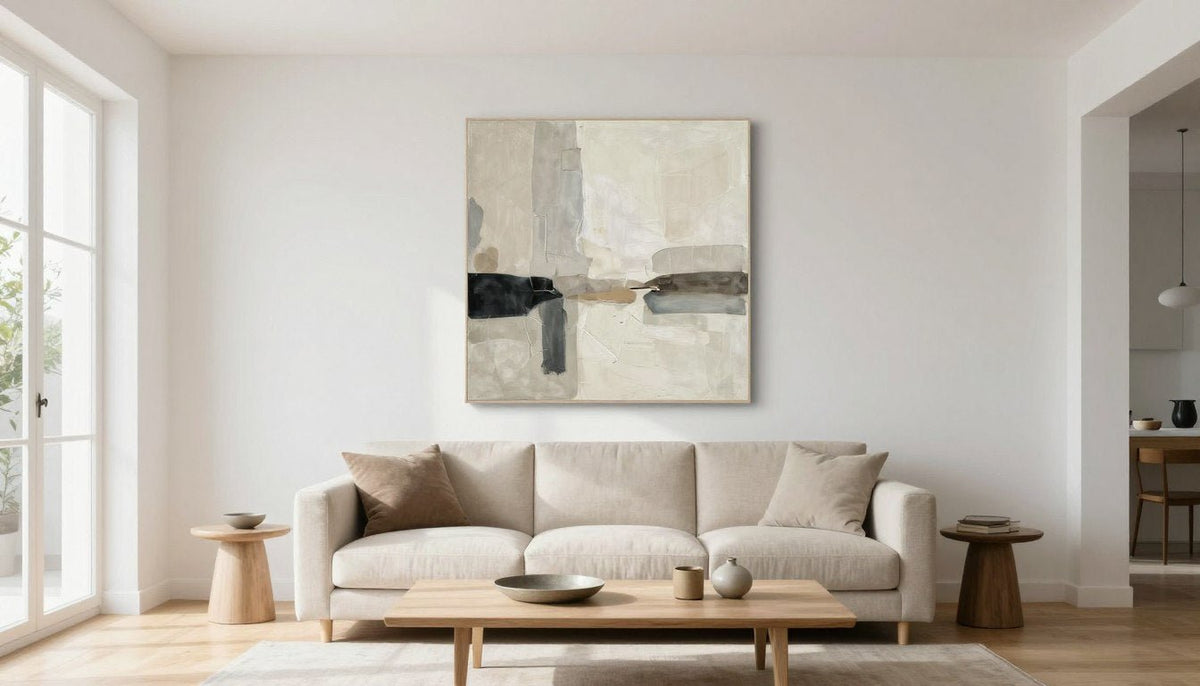
The 2/3 to 3/4 Rule The width of your artwork should be approximately two-thirds to three-quarters the width of the furniture it hangs above.
- For a 90–96 inch sofa, choose art 60–75 inches wide.
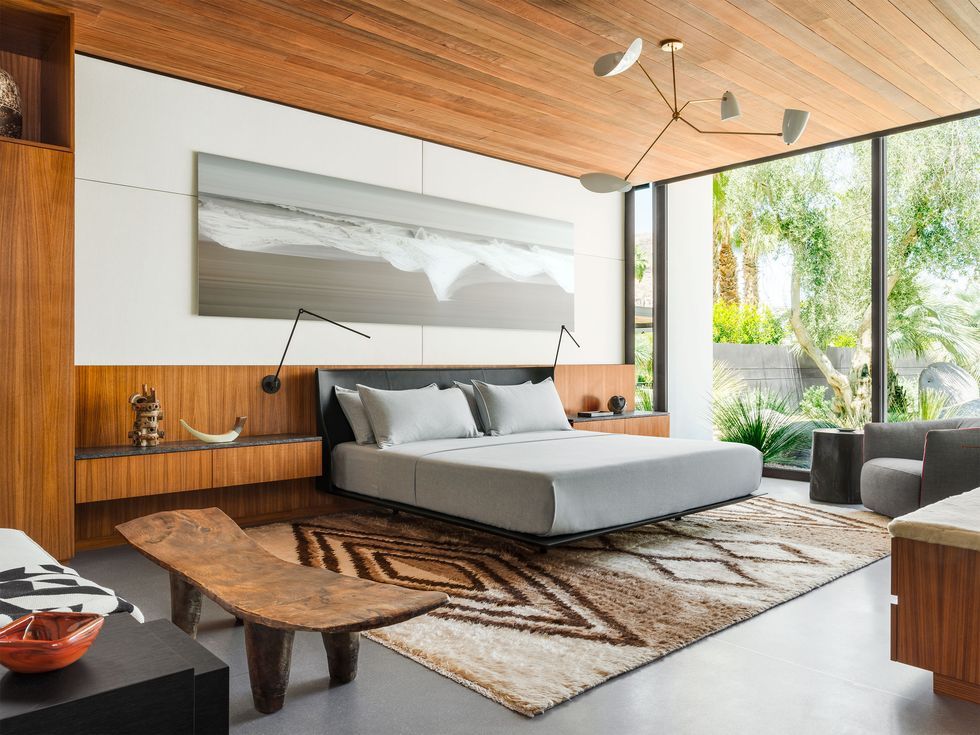
- For a queen bed (60 inches wide), target 40–50 inches wide (or wider for dramatic effect).
- For a console table or mantel, apply the same proportion.
This rule creates balance and prevents the “floating” look of undersized art or the cramped feeling of oversized pieces.
The Gap Rule Leave 6–12 inches of wall space between the bottom of the artwork and the top of the sofa, bed, or console. Larger or heavier pieces can sit slightly closer (6–8 inches), while lighter pieces benefit from a bit more breathing room.
Eye-Level Placement The center of the artwork should sit 57–60 inches from the floor for standing eye level in most rooms. In living areas where people are seated, you can lower this slightly to 50–55 inches.
Wall Coverage Guideline A single statement piece should occupy roughly 60–75% of the available wall width above the furniture for maximum impact.
Choosing Sizes for Different Spaces
Above the Sofa (Living Room) This is the most common placement. Use the 2/3–3/4 rule religiously. Horizontal abstracts work especially well here because they echo the sofa’s shape. For very long sectionals, consider a single oversized horizontal piece or a balanced diptych/triptych.
Above the Bed (Bedroom) The bed acts as your “sofa.” Measure the headboard or the full width you want to cover. Many people choose pieces 40–60 inches wide for queen beds and 50–70 inches for king beds. Horizontal formats create a serene, grounding effect. Vertical abstracts can work if the ceiling is high and you want to draw the eye upward.
Above a Console, Mantel, or Sideboard These narrower surfaces require more precise scaling. Follow the 2/3 rule strictly and consider slightly taller vertical or square formats to add height and interest.
Large Empty Walls or Feature Walls Here you have more freedom. Oversized abstracts (48 inches and larger in both directions) create powerful focal points. For very tall walls, vertical formats or stacked arrangements work well. Always visualize with painter’s tape or paper cutouts before purchasing.
Small Spaces and Apartments Don’t default to tiny art. In small rooms, one medium-to-large statement piece (36–48 inches) often works better than multiple small pieces, which can make the space feel cluttered. Abstracts with bold color or texture can make a small room feel more expansive.
Office and Workspace Walls Scale to the desk or credenza width using the same 2/3–3/4 guideline. In corporate or minimalist offices, slightly larger pieces can add personality without overwhelming the professional environment.
Common Mistakes to Avoid
- Choosing art that is too small for the wall or furniture (the most frequent error).
- Ignoring the furniture width and focusing only on wall size.
- Hanging pieces too high, making them feel disconnected from the seating area.
- Using multiple small pieces when one larger work would create stronger impact.
- Forgetting to account for frame or canvas depth when measuring.
Practical Tips for Choosing Abstract Painting Sizes
- Measure Twice: Always measure your furniture and wall space before shopping. Note both width and the vertical space available from furniture top to ceiling or molding.
- Use Visualization Tools: Many online retailers offer “try it on your wall” features. Alternatively, cut brown paper to the exact dimensions and tape it in place for several days.
- Consider Texture and Color: Bold, heavily textured abstracts or those with strong color contrast can handle slightly larger scales. Delicate, minimalist abstracts may need more breathing room.
- Think About Orientation: Horizontal abstracts suit wide furniture. Vertical pieces add height to low ceilings or narrow walls. Square formats offer versatility for symmetrical arrangements.
- Account for Viewing Distance: In large rooms, bigger art is needed so details remain visible from across the space. In intimate settings, medium sizes feel more personal.
2026 Trends in Abstract Painting Scale
Current trends favor oversized and large-scale abstracts as statement pieces, especially in open-concept homes. Textured and mixed-media works in substantial sizes are particularly popular because the surface variation rewards closer inspection. At the same time, collectors are embracing “right-sized” art that perfectly matches specific furniture rather than defaulting to the largest possible piece.
Where to Shop for Abstract Paintings in the Right Sizes
When browsing collections, look for detailed dimension information and multiple size options. Excellent sources include:
- Explore large and oversized abstract wall art with clear sizing for living rooms, bedrooms, and offices.
- Discover handcrafted textured abstract paintings available in multiple dimensions ideal for precise placement.
- Browse geometric wall art collections offering both horizontal and vertical formats in a wide range of scales.
- Shop 3D textured wall art for sculptural abstracts in carefully proportioned sizes.
For detailed professional guidance on proportions, read this helpful resource: The Untold Secrets to Finding the Perfect Size Wall Art.
Frequently Asked Questions
What is the most important rule when choosing abstract painting size? The 2/3 to 3/4 rule: the width of the artwork should be two-thirds to three-quarters the width of the furniture beneath it (sofa, bed, console). This creates visual balance and prevents the piece from looking too small or overwhelming.
How high should I hang an abstract painting above a sofa? Leave 6–12 inches between the bottom of the frame and the top of the sofa. Center the artwork at approximately 57–60 inches from the floor for standing eye level, or slightly lower if the primary viewing is from a seated position.
Can I use a square abstract painting above a long sofa? Yes, but it usually works best when combined with other elements or when the square is large enough to feel substantial. Many designers prefer horizontal abstracts above sofas for better proportional harmony, though a bold square can work in modern or symmetrical rooms.
What size abstract art is best for a small bedroom? In smaller bedrooms, one medium-to-large piece (around 36–48 inches wide) often creates more impact and makes the room feel bigger than several tiny pieces. Follow the bed-width proportion rule and avoid cluttering the wall.
Should abstract paintings be larger or smaller than representational art? Abstracts can often be slightly larger because they lack a clear focal point that needs to be viewed up close. However, the same proportion rules apply—scale to the furniture and wall, not to the style of the painting.
How do I choose size when buying abstract art online? Always check the exact dimensions listed. Use the retailer’s visualization tool if available, or create paper templates. Prioritize sites that offer multiple sizes of the same artwork so you can select the perfect fit for your space.
Is it better to buy one large abstract or multiple smaller ones? For most walls above furniture, one strong, well-sized abstract creates a cleaner, more powerful statement. Multiple smaller pieces work well for gallery walls or very long expanses but require careful spacing and visual cohesion to avoid looking scattered.
What if my abstract painting is slightly too big or too small? Slightly oversized can sometimes work if the colors and composition are strong. Slightly undersized is harder to fix. When in doubt, go one size larger rather than smaller—abstracts with presence tend to look more intentional in most modern interiors.


