
Commission Large Abstract Painting: A Practical Guide to Creating a One-of-a-Kind Statement Piece
Buying a finished painting is convenient. Commissioning one is different. When you Commission large abstract painting work, you are not choosing from what happens to be in stock. You are specifying size, palette, texture, and mood so the finished canvas belongs to a particular wall. For extra-large living rooms, high ceilings, and long sofas, that difference is often decisive. Off-the-shelf sizes rarely match the architecture. A commissioned abstract can.
This guide explains why people commission large abstracts, how a typical process works, what information you should prepare, and how to judge quality before the first brushstroke. It is written for homeowners and designers who want a handmade, large-scale original rather than a print or a near-miss ready-made canvas.
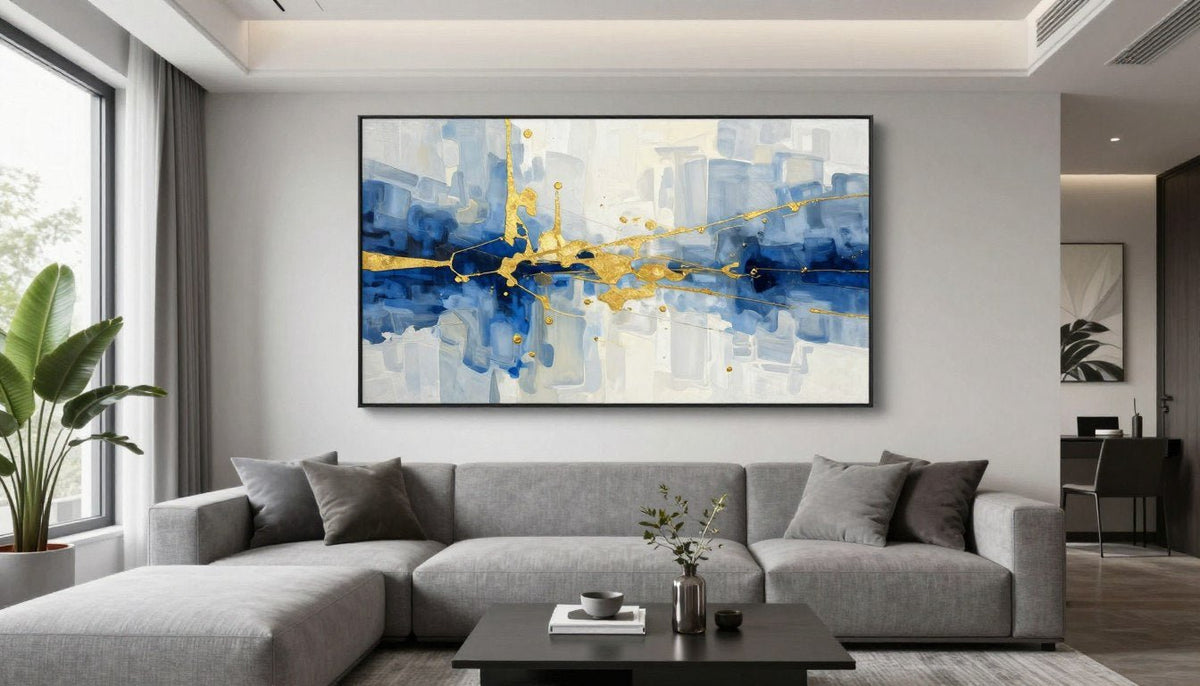
Why Commission Instead of Buying Ready-Made
A large abstract has to do two jobs at once. From across the room it must hold the wall. Up close it must reward inspection with real paint, not a photograph of paint. Ready-made works can succeed at both, but only if their dimensions, colors, and surface happen to fit. Commissioning solves the usual mismatches:
- The wall is 90 inches wide and the nicest painting is 48.
- The sofa is warm beige and every available piece is icy blue.
- You want heavy impasto, but the listing is a smooth print.
- The room has a high ceiling and a square format would look lost.
A commission starts from the room rather than from inventory. That is the main advantage. The second is uniqueness. An original cannot be duplicated for another buyer. The third is collaboration. You can ask for more texture, a quieter palette, or a wider format without waiting for the “right” piece to appear.
What “Large” Should Mean in a Commission
In residential interiors, large usually begins around 48 inches on the long side. Many successful living-room commissions are 60, 72, or even 80-plus inches wide. Above a sofa, a useful starting rule is that the painting occupy roughly two-thirds of the sofa’s width. On an empty feature wall, 60 to 75 percent of the available width often looks intentional rather than timid.
Measure before you talk to an artist or studio:
- Wall width and height
- Distance from the sofa back or console to the ceiling
- Obstacles: vents, sconces, switches, beams
- Viewing distance from the main seating
Photograph the wall in morning and evening light. Those photos are more useful than a verbal description of “a big painting over the couch.”
How a Commission Typically Unfolds
Processes vary, but most professional commissions follow a similar sequence.
1. Conversation and brief. You share photos of the room, preferred colors, the mood you want (calm, energetic, architectural), and any works you already like. The artist or studio asks about size, orientation, and budget.
2. Scope and proposal. You agree on dimensions, medium (oil, acrylic, mixed media), texture level, and a color direction. A deposit usually reserves studio time.
3. Concept or sample. Some studios send small color studies or digital mockups. Others work from a written brief and reference images. The important part is alignment before the large canvas is built.
4. Creation. Large abstracts take time. Oils dry slowly. Thick texture needs layers. A realistic studio period is often several weeks, not a few days. Progress photos are common; daily micromanagement is not.
5. Review. Near completion, you see images. Minor adjustments to balance or emphasis may still be possible. Major redesigns at this stage are usually costly or impossible.
6. Finishing, packing, and shipping. Varnish, drying time, and professional crating matter more at extra-large scale. Confirm how an oversized canvas will arrive and whether it ships stretched or rolled.
This structure is standard among independent artists and studios that regularly take custom work. Guides on commissioning from working painters describe the same stages: brief, deposit, making, review, delivery.
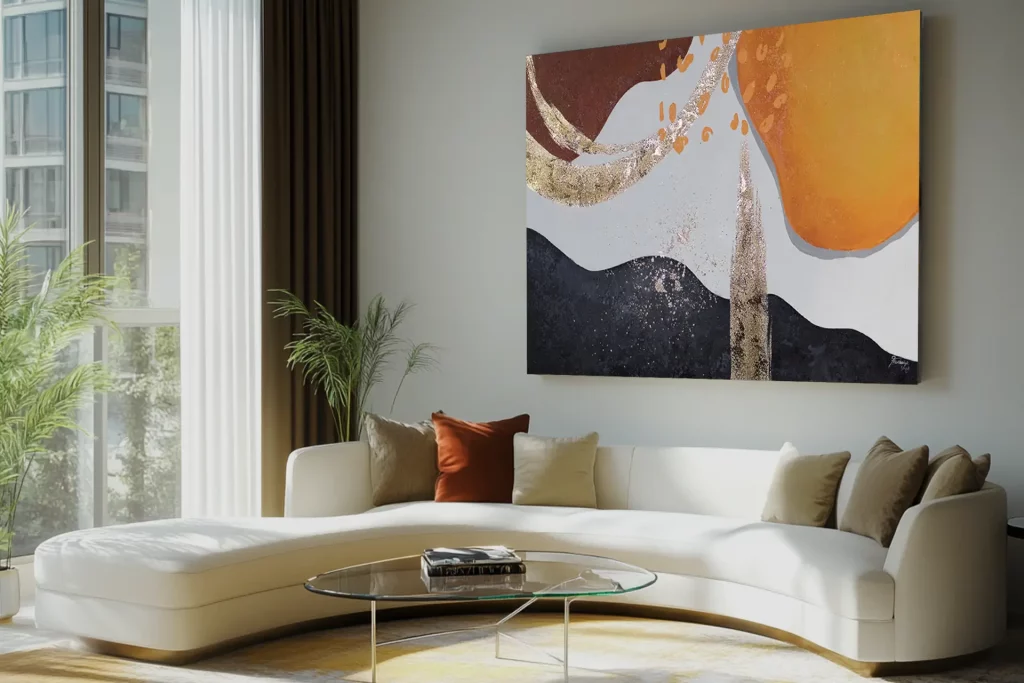
What to Tell the Artist
Vague briefs produce vague paintings. Useful information includes:
- Exact size in inches or centimeters
- Horizontal, vertical, or square format
- Dominant colors already in the room (sofa, rug, wood, metal)
- Colors you want in the painting, and colors you want to avoid
- Desired texture: smooth, moderate, or heavy impasto
- Mood: quiet, dramatic, coastal, warm, high-contrast
- Reference images of paintings you like (style, not a request to copy)
It also helps to say what the painting should not be. “No gold leaf,” “no figurative shapes,” or “not too dark” can prevent disappointment.
Abstract work is not a blueprint. You are commissioning a direction, not a photograph. The best results come when the artist has room to make decisions inside a clear frame.
Color, Texture, and Materials
For large walls, texture is often as important as color. Thick oil or acrylic, palette-knife ridges, and layered grounds catch light in a way flat prints cannot. If the room has strong natural side-light, a textured surface will change through the day. If the lighting is even and overhead, you may want bolder contrast so the work does not go quiet.
Oil remains a favorite for commissioned large abstracts because it blends slowly and supports deep layering. Acrylics can also be built up and dry faster, which shortens some timelines. Mixed media and metallic accents should be specified if you want them, because they change both cost and care.
Palette choices should start from the room. A commissioned piece can either echo existing tones or introduce one controlled accent. Trying to match every pillow usually makes the painting timid. Trying to ignore the room entirely can make it feel imported.
Budget, Timeline, and Communication
Price depends on size, materials, texture, and who is painting. Handmade extra-large canvases from production studios can be more accessible than a mid-career gallery commission. Independent artists often price by size and complexity. Deposits are normal. Revisions after a certain stage may cost extra.
Ask these questions early:
- Who actually paints the work?
- How unique is it—one of a kind, or a custom variation of an existing composition?
- How many progress photos will I receive?
- What happens if I want a change after the first review?
- How is an oversized piece packed and insured?
A clear written summary of size, palette, texture, price, and dates protects both sides.
Where to Commission Large Abstract Paintings
If you want extra-large handmade textured abstracts with a custom-friendly process, a practical starting point is to Commission large abstract painting work through AbstractXL, which focuses on oversized handmade abstracts and made-to-order pieces for modern interiors.
For a wider range of independent artists who accept commissions, Saatchi Art maintains a dedicated commissions section. For historical context on abstraction itself, Tate’s overview of abstract art is a reliable reference when you are still deciding how far from representation you want to go.
Look for studios that show close-up texture photographs, list real dimensions, and describe how custom sizing works. Avoid listings that look identical across many sites with no evidence of a handmade surface.

Hanging and Living With the Finished Work
Once the painting arrives, treat it as architecture. Center it near 57–60 inches from the floor, or slightly higher for very tall walls. Leave space on either side of a sofa. Use anchors rated for the actual weight; thickly painted extra-large canvases are heavier than prints.
Lighting should graze the surface rather than flatten it. A picture light or adjustable spot will reveal the texture you paid for. Keep the work out of prolonged direct sun. Dust with a dry, soft cloth. Do not use household sprays on oil or heavy impasto.
Conclusion
To Commission large abstract painting work is to design a wall rather than decorate it. The process is straightforward when the brief is specific: measure the space, define palette and texture, agree on size and timeline, then let the studio or artist build a surface that cannot be bought off a rack. The reward is a painting that fits the sofa, the light, and the room’s mood because it was made for them.
Start with accurate measurements and a short list of colors you want to live with. Then choose a studio or artist whose existing large abstracts already feel close to your taste. A commissioned original at the right scale will do more for a living room than a collection of almost-right smaller pieces.
FAQ: Commissioning a Large Abstract Painting
How long does a large commission take? Often several weeks, sometimes longer for oil and heavy texture. Drying, layering, and shipping of oversized canvases all add time. Ask for a written timeline with the deposit.
How big should the painting be above my sofa? A common guideline is about two-thirds the sofa’s width. Measure the wall and leave 6–12 inches of space on each side so the work does not look cramped.
Can I choose exact colors? You can specify a palette and share room photos. Exact pigment matching is not always possible or desirable, but a good studio will stay within an agreed range.
Is a commissioned abstract a unique original? It should be, if that is what you paid for. Confirm in writing whether the work is one of a kind or a custom variation of a repeated composition.
Do I need to approve a sketch first? Some artists provide studies; some work from a brief and progress photos. Either can work if the scope is clear before painting begins.
What if I don’t like the finished piece? Policies vary. Ask before you pay a deposit: how many revisions are included, and at what stage changes are still possible. Late-stage redesigns are usually limited.
Oil or acrylic for a large commission? Oil offers slower blending and rich layering. Acrylic dries faster and can still be heavily textured. Choose based on the surface you want and the timeline you need.
How should a large commissioned painting be shipped? Professionally packed, often in a crate if stretched. Some oversized works ship rolled and are restretched on arrival. Confirm insurance and handling.
Where can I commission extra-large handmade abstracts? Studios that specialize in oversized textured work, such as Commission large abstract painting options at AbstractXL, and artist platforms with a commissions program such as Saatchi Art, are practical places to begin.
Will a custom painting work if I move house later? Yes. Choose a strong composition rather than an overly site-specific gimmick. A well-made large abstract can be rehung in a new room if the scale is still appropriate.
A commission is successful when the wall, the palette, and the artist’s hand agree. Be precise about size and mood, then give the painting enough time and enough freedom to become more than a color match.


